
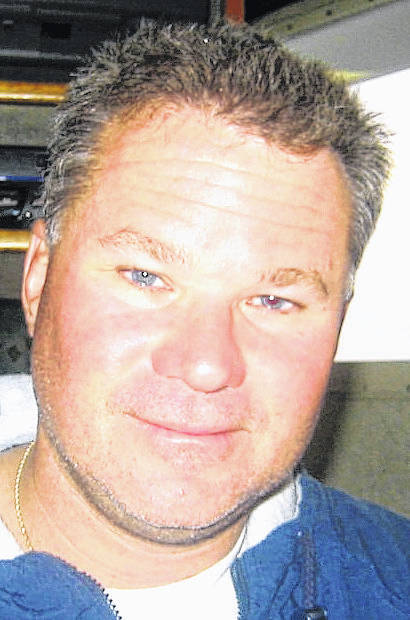
Nearly three decades after serving as a dive instructor off the California coast, Joe West’s world was rocked earlier this month with the tragic news of an explosion that destroyed the very boat he served on and killed 34.
West, a Laurinburg resident, is now a professor at The University of North Carolina at Pembroke with a Ph.D. in public policy and public administration. In the early 1990s, however, he worked with Truth Aquatics as a scuba instructor when there were only three main boats — the Vision, the Conception and the Truth.
On Sept. 2, news traveled quickly around the world that the Conception had exploded into flames with 39 people aboard, and West remembered how he felt at the moment he heard that news.
“All I could think about was how an absolutely terrible way to die,” West said. “Even now I’m deeply disturbed by what happened. I feel immense pain for the families and the people who died on that boat.”
Killed were 33 divers and one crew member. Five people survived, including the captain.
***
The business
***
True Aquatics, known for its recreational scuba diving trips since 1974, is a diving operation that allows people to travel to the Channel Islands National Park near Santa Barbara, California. Divers can also participate in ocean kayaking, stand-up paddle boarding, island hiking, whale watching, sunbathing and fishing.
The 39 passengers were boarded on the Conception, which was built specifically for diving. The boat had a 46-bunk occupancy, rafts and jackets for about 110 passengers and equipped with food preparation appliances with a built-in barbecue.
The Coast Guard, the Ventura County and Santa Barbara County fire departments, and Vessel Assist responded to a mayday call Monday, Sept. 2 at 3:30 a.m. about the Conception being in flames, upside down and stranded in the middle of the ocean at Platts Harbor near Santa Cruz Island.
According to Fox News, Ventura County firefighters were able to reach the burning vessel within 15 minutes, but struggled to extinguish the scorching boat as it continued to erupt in flames.
After the flames were subdued, there was a search party sent out for missing bodies in the 65-foot-deep ocean. All 34 were found.
After further investigation, it was found that the passengers died from smoke inhalation — but was unconfirmed if the victims, including the watchmen required by federal law, were still asleep or not.
Although he wasn’t there during the incident, from his experience, West understood the operation and how dive boats work, including the emergency procedures that True Aquatics did and didn’t cover.
During his time as a scuba diving instructor, West had the ability to contact True Aquatics if there were people who wanting to go on a diving expedition. He would check to see what trips were available on all three boats and they would direct him to the calendar to check to see what the boats offered for dive trips.
“Some dive trips would be simply in or out one day, in which case you wouldn’t be sleeping overnight,” West said. “Some dive trips were two days, some were three, some were five.”
West added that he always did overnight trips, but he rarely would go more than three days.
***
Talking safety
***
According to West, a safety briefing is held during every trip. The captain would give the safety briefing on the deck once all of the passengers were awake and ready.
“The safety briefing typically focused on the dive operations themselves — ‘Here’s what you do when you enter the water, here’s how you enter the water, you make sure your name is down on the sleight, here’s how you get out of the water, here’s the safety recall sound,’” West said.
West recalled during his time as a scuba instructor, the crew members pointing out where the life-preservers were but not about what to do in case of a fire or the whereabouts of the fire extinguishers.
He also remembered waking up around 4 a.m. to walk up to the deck for breakfast or do some work on deck, but doesn’t recall seeing a watchman. Under federal law, a boat is supposed to have a watchman who can stand and check for any possible signs of danger and alert the crew members, captain and passengers immediately.
According to the Los Angeles Times, the agency’s preliminary report said, “at the time of the fire, five crew members were asleep in berths behind the wheelhouse, and one crew member was asleep in the bunkroom.”
West also described how the bunkroom looked when he taught his scuba class. The bunkroom was a small, barely lit room with no windows, and narrow aisles and stairs. The one factor that stood out to him the most was the small “emergency exit” sign with no lighting to indicate where it was.
“Imagine being in this small, confined space with no windows, knowing that – and I bet most divers knew there was only one exit, the main exit that goes up – they didn’t discuss the emergency exit, at least when I dove there,” he said. “Imagine being in that area trapped with effectively no way to get out.”
West believed that, even if 34 people tried to get through the emergency exit, not all of them would be able to get out because of how small the space was.
“I guarantee, not only them but probably every dive operation in the United States now will be looking at this saying, ‘we’re going to change our protocols.’ I guarantee it, actually because there’s too much liability,” he said.
***
Looking back
***
West said he believes that True Aquatics was a great operation and that they were probably doing what a majority of the other diving operators were doing in the United States. From his past experiences on other dive boats, he noticed that some of them ran almost the same way.
He added that, from his perspective, he saw the deficiency with the respect to safety. In hindsight, he said, things didn’t seem unsafe.
Octavia Johnson is a fall semester intern from The University of North Carolina at Pembroke.


